Imagine endless waves of golden sand. They roll toward the horizon. A brilliant canopy of stars caps the scene. This is the Sahara. A trek through its heart is an unforgettable experience. This guide is your map. It breaks down everything you need to plan this journey.
Your Sahara Desert Adventure Starts Here
A Sahara trek is more than a holiday. It is a deep dive into a timeless landscape. Morocco provides the perfect gateway to this vast sea of sand. A well-established tourism network makes the adventure accessible and safe. This network has made Morocco a magnet for travellers seeking something different.
Most journeys begin in bustling cities like Marrakech. The drive itself is an adventure. It takes you through the dramatic Atlas Mountains. You will pass ancient, sun-baked kasbahs. This slow transition builds anticipation. It makes your first step onto the warm sand even more special. The magic lies in the entire path. Explore the various Moroccan destinations that can become part of your story.
Why Morocco is the Ideal Gateway
Morocco has two legendary dune fields. Each offers a different flavour of desert life. Erg Chebbi is famous for its towering, iconic dunes. They are relatively easy to reach. Erg Chegaga offers a wilder, more remote feel. It is for those who want to get away from it all. Deciding which one is right for you is the first big step.
Do not worry. We will demystify the planning process. This guide is a clear roadmap. It will turn your dream expedition into a reality.
A Sahara trek is the ultimate digital detox. No Wi-Fi exists for a few days. You are free to disconnect. You can soak in the stunning natural world. It is a rare chance to be fully present. You will experience fiery sunsets to impossibly clear night skies.
An Experience Built on Authentic Tourism
Sahara desert trekking is a cornerstone of Moroccan tourism. Morocco now welcomes well over 15 million visitors a year. A large number came for a desert adventure. This industry is vital. It supports local communities. It makes up over 7% of the nation’s GDP.
Your trip is not just a holiday. It is a meaningful contribution. It helps keep experiences authentic. It supports the people who call this incredible landscape home.
Choosing Your Perfect Desert Route
The path you take shapes your entire experience. Morocco offers two main gateways into the sand sea. Each has a distinct personality. Your decision boils down to one question. Do you want iconic, accessible beauty, or do you crave a raw, untamed wilderness?
This single question points you toward Erg Chebbi or Erg Chegaga. Both are magnificent. They serve up different adventures for different travellers. Getting to know them is the first step in planning your trip.
Meet Erg Chebbi: The Accessible Icon
Think of Erg Chebbi. You picture the Sahara from postcards and films. Here you find famous, fiery-orange dunes. Some soar up to an impressive 150 metres. These majestic sand mountains are near Merzouga. This small town acts as the main hub. This makes them surprisingly easy to reach.
Erg Chebbi has a well-established setup for visitors. You will find a huge range of places to stay. These range from simple Berber camps to luxurious desert retreats. Some have private bathrooms and king-sized beds. Erg Chebbi is a brilliant choice if you value comfort. It’s for those who want to see towering dunes without a long, bumpy off-road journey. You can find more details in our guide to exploring the desert from Merzouga.
This quick visual helps you see the choice. You are choosing between Morocco’s two main desert destinations.
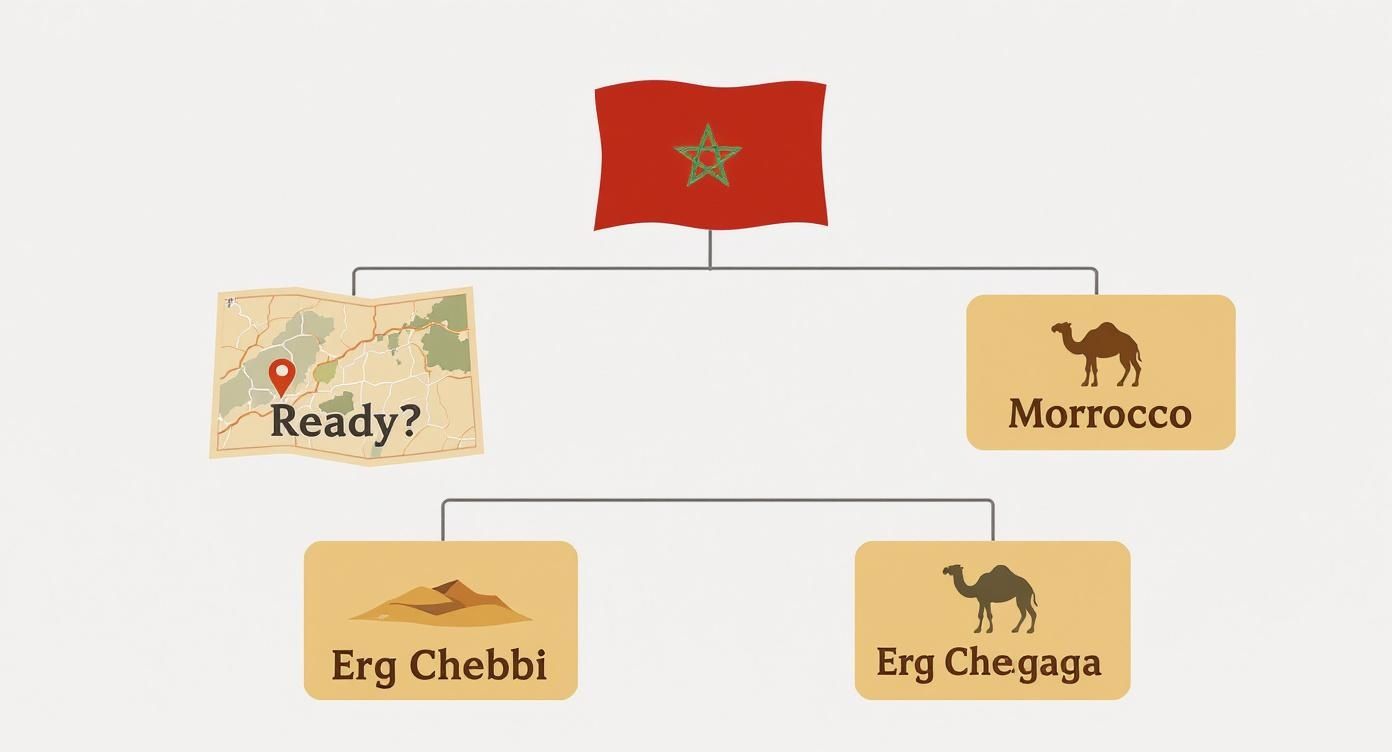
As you can see, the path forks. It depends on what you prioritise. Convenience or remoteness. This leads you to the picture-perfect dunes of Erg Chebbi or the wild heart of Erg Chegaga.
Discover Erg Chegaga: The Wild Heart
Erg Chegaga is for anyone who craves true solitude. It is located about 60 kilometres from the nearest town, M’Hamid. Getting there requires a proper 4×4 journey across rugged terrain. That remoteness is the whole point.
Erg Chegaga is a sprawling, windswept wilderness. It feels genuinely untouched. The dunes here are more spread out than in Chebbi. This creates an incredible sense of scale and isolation. Seeing another group of travellers is rare out here. The camps reflect this spirit. They are generally more rustic. They focus on an authentic, off-the-grid desert immersion.
Erg Chegaga is calling your name if your perfect trip means having the desert to yourself. The journey in is tougher. Your reward is a profound sense of peace under an endless sky.
It is not about which erg is “better.” It is about which one is better for you. Think about your travel style. Consider how much time you have. Decide if you lean toward comfort or raw nature. The answer will guide you.
Erg Chebbi vs Erg Chegaga: A Quick Comparison
Let’s put these two giants of the Moroccan Sahara side-by-side. The table below breaks down the practical differences. It helps you make the right call for your adventure.
| Feature | Erg Chebbi (Near Merzouga) | Erg Chegaga (Near M’Hamid) |
|---|---|---|
| Accessibility | Easy. Paved roads take you right to the edge of the dunes. About a 9-hour drive from Marrakech. | Remote. Requires a 2-3 hour 4×4 journey from M’Hamid. Total drive from Marrakech is about 10 hours. |
| Dune Landscape | Tall, dramatic, and steep golden-orange dunes, packed into a concentrated area. | A vast, sprawling sea of sand covering over 40 kilometres. Feels more wild and expansive. |
| Atmosphere | More popular and can feel busy. You will likely see other tour groups and camps. | Extremely remote and quiet. This is where you go for a true sense of solitude. |
| Accommodation | A wide range of options, from basic shared tents to luxury camps with hotel-like comforts. | Camps are typically more traditional and rustic, focused on an authentic Berber experience. |
| Best For | Travellers short on time, families, and those wanting iconic views with more comfort. | Adventurous travellers, those seeking an off-the-beaten-path trip, and anyone craving solitude. |
Both Erg Chebbi and Erg Chegaga offer a powerful connection to the desert. Chebbi serves up iconic beauty with convenience. Chegaga offers a deeper, more immersive journey into the wild. Ask yourself what you want to feel on the sand. The right path will become clear.
Building Your Ideal Trekking Itinerary
A great itinerary is the secret to an unforgettable Sahara adventure. It turns a simple holiday into a proper journey. Each day unfolds with new sights and experiences. You will not feel rushed. A solid plan helps you balance long road hours and quiet moments of discovery.
The right structure ensures you see everything. It gives you space to soak it all in. You will see the winding passes of the Atlas Mountains. You will see the jaw-dropping view of the dunes. Think of these itineraries as well-trodden paths. You can follow them step-by-step. Or you can tweak them to create your own unique adventure.
The Classic 5-Day Marrakech To Fes Trek
This is one of Morocco’s most iconic routes. It connects two great imperial cities. It guides you through a spectacular cross-section of the country’s landscapes. It is one of the most efficient and breathtaking ways to experience southern Morocco.
Here is a rough sketch of how it plays out:
- Day 1: Marrakech to Dades Valley. The trip starts with a drive over the stunning Tizi n’Tichka Pass. The real showstopper is a stop at Aït Benhaddou. It is a famous fortified village you have likely seen in films. It is a UNESCO World Heritage site. You will end the day in the beautiful Dades Valley.
- Day 2: Dades Valley to Merzouga. After breakfast, you head for the towering Todra Gorge. This massive canyon is a magnet for rock climbers. From there, the scenery changes completely. You get your first taste of the Sahara. You will arrive in Merzouga in the afternoon. Then you will take a camel trek into the Erg Chebbi dunes.
- Day 3: Exploring the Merzouga Desert. Today is all about the desert. You might visit local Khamlia musicians. You can hear their Gnawa music. You might meet some nomad families. Or you can find a quiet dune and relax. The day ends with another unbelievable sunset. You spend the night under the stars at a traditional desert camp.
- Day 4: Merzouga to Midelt. You should wake up early for this. The desert sunrise is pure magic. After riding your camel back, the journey continues north. You travel through the Ziz Valley, a lush corridor of palm groves. Your stop for the night is Midelt. It is a small town in the Atlas Mountains.
- Day 5: Midelt to Fes. The final leg takes you through fragrant cedar forests. You might even spot some wild Barbary macaque monkeys. You will pass through Ifrane. It is a town that feels like a European alpine village. People call it “Little Switzerland.” You will arrive in the ancient city of Fes in the evening.
This itinerary is a fantastic blend of culture, nature, and adventure.
Shorter Sahara Itinerary Options
You do not have five days to spare. Do not worry. You can still have a powerful desert experience on a tighter timeline. These trips are more focused. They cut down on travel between major cities. They give you maximum time in the sand.
A popular choice is the 3-day Marrakech to Erg Chebbi loop. This blitz tour covers the first two days of the 5-day itinerary. It loops back to Marrakech on day three. It is fast-paced but incredibly rewarding. Another great option is a dedicated desert tour. It starts and ends in the same city. A 4-day Sahara desert tour to Merzouga from Marrakech gives you more breathing room.
Manage your expectations for a shorter trip. A 3-day tour is an amazing whirlwind. But it involves roughly 20 hours of driving. Be prepared for long, scenic days in the car.
Customising Your Sahara Desert Trek
These sample itineraries are just starting points. The real magic of a private tour is the freedom. You can craft a journey that is entirely your own. You can move at a pace that feels right for you.
Here are a few ideas to get you thinking:
- Add an extra night in the desert. You can unwind and stargaze more. You can try your hand at sandboarding.
- Spend more time in the Atlas Mountains. Maybe take a guided hike to a remote village. You could visit a local Berber family.
- Lean into the culture. Add more stops at historic kasbahs. You could visit local artisan workshops along the route.
Talk to your tour operator. A good guide is an expert at weaving your interests into the journey. They can turn a standard tour into something personal and unique.
When to Go and What to Expect Physically
Timing is everything in the Sahara. Picking the right season is crucial. It can be the difference between an incredible adventure and a gruelling ordeal. The desert climate is about extremes. Getting your dates right is the most important decision you will make.
The sweet spot for a Sahara trek is the shoulder seasons. Spring, from March to May, is ideal. Autumn, from September to November, is also perfect. They offer the right balance. You get long, sunny days. They are warm enough for trekking. But you avoid the brutal heat of summer.
Understand the Seasons
Daytime temperatures are comfortable in spring and autumn. They typically hover between 18°C and 25°C. This is ideal weather for walking. You can explore dunes or enjoy a camel ride. The nights get crisp and cool. You will want to pack layers. It is a refreshing cold, not a bitter one.
Summer (June to August) is a different story. It is fiercely hot. Temperatures often soar above 45°C. Physical exertion during the day becomes unpleasant. It can be genuinely dangerous. Many of the best tour operators do not run desert trips during peak summer.
Winter (December to February) brings its own challenges. The days can be lovely. They are sunny and mild. But the temperature plummets after sunset. It often drops below freezing. If you plan a winter trek, you need proper cold-weather gear. This will keep you comfortable overnight. For a deeper dive, check our guide on the best time to visit Morocco.
The Golden Rule of the Desert: Expect huge temperature swings no matter the season. It is normal for the temperature to drop by 20°C or more from day to night.
How Fit Do You Need To Be?
You do not need to be a marathon runner. The physical demands depend on your itinerary. Most standard tours are very accessible.
A trip to the desert for most people involves a mix of 4×4 driving. It includes a relatively short camel ride to a desert camp. A basic level of fitness is perfectly fine for this.
- Standard Camel Treks: These usually involve a one or two-hour camel ride. It feels strange at first. It might use a few muscles you forgot you had. Anyone with average mobility will manage fine.
- Multi-Day Walking Treks: This is a different ball game. These treks can cover 15 to 25 kilometres a day. You will cross soft sand and stony hammada. You will need good stamina and decent leg strength.
Be honest with yourself about your fitness level. If you have any worries, talk to your tour operator before you book. They know the terrain. They can help you pick a trip that you will genuinely and safely enjoy.
Safety and Support on Your Trek
Your safety is the number one priority for any reputable guide. The Sahara might be a vast, wild place. But organized treks are designed to manage the risks.
Your guides are professionals. They have this handled. They navigate the often-trackless landscape. They ensure there is enough food and water. They set up a secure and comfortable camp each night. They also have first-aid supplies. They have clear plans for emergencies. When you go with a trusted provider, you can relax. You can soak in the incredible surroundings. All logistics are in expert hands.
What to Pack for Your Sahara Trek
Packing smart guarantees a great Sahara adventure. It is a place of extremes. It has blazing sun by day. It has a surprising chill after sunset. The right kit means you are comfortable. You will be safe and ready for anything.
This is not about bringing everything you own. It is about being strategic. We will walk through the essentials. What to wear. What to put on your feet. The must-have gear that will make your trek smoother.
Clothing: Layers are Your Best Friend
Remember this one thing: layer, layer, layer. The temperature in the Sahara can plummet by 20°C after sunset. Dressing in layers gives you freedom. You can peel things off or pile them on as needed.
Think light, breathable fabrics. Cotton and linen work for the heat of the day. But you will also need genuinely warm gear. This is for the crisp, clear desert nights. It is all about having a flexible system.
For a general look at what to bring, check our complete guide on what to pack for Morocco.
Footwear, Health, and Other Essentials
Happy feet make for a happy trekker. Your choice of footwear is crucial. A few key items will keep you healthy. They will also help you find your way around camp in the dark. A little preparation here goes a very long way.
Do not bring brand-new hiking boots. Make sure your shoes are well broken in. You will cross everything from soft sand to stony ground. Blisters are the last thing you want.
A traditional Berber scarf is a brilliant piece of kit. It is often called a cheche or tagelmust. Ask your guide to show you how to wrap it properly. It protects your face from sun, wind, and blowing sand.
Getting your packing right is a game-changer. We have put together a handy checklist. It will make sure you do not forget anything important.
Sahara Trekking Packing Checklist
| Category | Essential Items | Notes |
|---|---|---|
| Clothing | Lightweight long-sleeved shirts, Loose-fitting trousers, Warm fleece/jacket, Windproof jacket, Base layers/thermals (for winter) | Light colours reflect the sun. Layers are key for temperature swings. |
| Footwear | Broken-in walking shoes or sturdy trainers, Camp sandals/flip-flops | Comfort is non-negotiable. Avoid new shoes. |
| Health & Hygiene | Sunscreen (high SPF), Lip balm with SPF, Sunglasses, Personal first-aid kit, Rehydration salts, Hand sanitiser | The sun is intense. Pack plasters, pain relief, and any personal meds. |
| Gear | Wide-brimmed hat, Reusable water bottle, Headlamp or torch with extra batteries, Power bank, Camera and spare batteries | A headlamp is essential for moving around the camp after dark. |
| Personal Items | Passport/ID, Cash (for tips/souvenirs), Wet wipes, Small travel towel, Book or cards for downtime | Store documents in a waterproof bag. |
| Optional | Cheche (Berber scarf), Sleep mask & earplugs, Portable speaker | You can buy a cheche locally; it’s a great souvenir and very practical. |
This list covers the bases for a comfortable and safe trip. Remember to adapt it to your own needs and the time of year.
How to Adjust Your Packing List
Not every trip is the same. You might need to tweak your list. A family’s needs will be different from someone in a luxury camp.
If you are travelling with kids, pack their favourite snacks. Bring a few small toys or games for downtime. A deck of cards or a good book can be a lifesaver.
You can pack lighter for a luxury camp. Most high-end camps provide towels and toiletries. But you will still need all the essential clothing layers. You also need sun protection and personal items. Always double-check with your tour operator. See exactly what is included.
Budgeting and Booking Your Tour
You are ready to plan your Sahara adventure. Let’s talk about the budget. The cost of a Sahara trek can swing wildly. It depends on the experience you want. The trip’s length matters. Your desired comfort level matters. Whether you join a group or hire a private guide matters.
Figuring out your budget from the start helps. It narrows down the options. You can find the perfect fit without any surprises. The first step is to understand what your money gets you.
Breaking Down the Costs
Most Sahara tour prices bundle in transport and accommodation. They include most of your meals. They also include iconic activities like a sunset camel ride. The big price differences come from quality and exclusivity. A shared budget tour feels very different from a private, luxury escape. The price reflects that.
Here is a rough idea of what to expect for popular tours from Marrakech:
- 3-Day Group Tours: This is your most wallet-friendly option. It typically runs from €100 to €250 per person. You will share a minibus with other travellers. You will stay in standard but comfortable desert camps.
- 3-Day Private Tours: A private tour gives you more say in your schedule. You get more personal space. Expect to pay between €300 and €600 per person. This gets you a private 4×4 with a dedicated driver. You can also upgrade your accommodation.
- 5-Day and Longer Private Tours: These longer trips offer a deep dive into the desert. They can cost from €500 to over €1,200 per person. The final price is heavily influenced by the luxury of your riads and camps.
Always get clarity on what is not included. Lunches, drinks, and entrance fees are often extra. Tips for your guide and driver are also extra. It is best to ask upfront.
Find a Reputable Operator
The tour operator you choose will make or break your experience. A fantastic company means knowledgeable guides. It means well-maintained vehicles and smooth logistics. A bad one can turn your dream trip into a nightmare.
Your search should start online. Dive into travel blogs. Read reviews on sites like TripAdvisor. Do not just look at the star rating. Read recent comments. Look for consistent praise about the guides. Check comments on vehicle safety and company responsiveness.
Before you pay, ask these questions:
- What is the group size? Smaller groups usually lead to a more intimate experience.
- Can you describe the camp facilities? Be specific. Ask about toilets and showers.
- Is the driver also the guide? Sometimes a separate guide offers deeper cultural insights. It is good to know which you are getting.
- What is your cancellation policy? Life happens. Make sure you understand the terms if your plans change.
A professional operator will answer all these questions patiently and in detail.
Booking in Advance vs Last Minute
Should you book ahead or wait until you get to Morocco? It is a classic trade-off.
Booking in advance means you can do your research. You can pick a highly-rated company. You can secure your spot. This is crucial if you travel during peak seasons. The best guides and camps get booked months ahead. It gives you peace of mind.
You can sometimes snag a last-minute deal in Marrakech. This works best for flexible travellers on a tight budget. But it is a gamble. You will have little time to properly vet the company. You could end up on a subpar tour. For a guaranteed good experience, booking ahead is almost always smarter.
Answering Your Sahara Trekking Questions
You are putting the finishing touches on your plans. A few last-minute questions might pop up. It is completely normal. I have put together some straight answers to common queries. This will help you feel confident and ready.
Is the Sahara Safe for Solo Women?
Absolutely. A Sahara desert trek is generally safe for solo female travellers. This is especially true with a reputable company. Your guides are professionals. They are accustomed to international visitors. Your safety is their top priority.
Book a private or small-group tour. Choose an operator with a solid track record. Scour recent reviews, particularly from other women. This gives you a real feel for their experience. It also helps to dress modestly. It is a simple sign of respect for local culture.
What are the Toilets Like at Camp?
This is a great question. The answer can range from rustic to five-star. It is vital to know what you are booking.
- Basic Camps: Think simple. You will likely find shared, squat-style toilets. There are probably no showers.
- Comfort Camps: This is a step up. They usually have shared Western-style toilets. They have basic showers. Hot water is not always guaranteed.
- Luxury Camps: Here you get a private tent. It has a full en-suite bathroom. You get hot showers. You get all the comforts of a good hotel room.
Always ask your tour operator for specifics before you confirm.
How Much Walking is Actually Involved?
The word “trek” can be confusing. For most standard tours, the journey involves a camel ride. It lasts about one or two hours. You can always hop off and walk alongside the caravan.
A dedicated multi-day walking trek is a different ball game. You will be hiking for several hours each day. Make sure you clarify how much walking versus riding is in your itinerary.
Your guide is your most valuable asset. Their job is to keep you safe and comfortable. Do not feel shy about asking questions or sharing concerns. They can teach you to wrap your headscarf. They can point out constellations. They are there to help.
Can You Trek in the Algerian Sahara?
Yes, you can. Morocco has a more developed tourism scene. But the Algerian Sahara offers a wilder, less commercialized adventure. It is for those willing to go off the beaten path. And it is getting easier to visit.
Algeria has also streamlined its visa process in recent years. It introduced a visa-on-arrival system. This is for tourists who book Sahara-focused trips through approved local agencies. This has unlocked breathtaking and remote places. You can visit the Tassili n’Ajjer UNESCO World Heritage site. It is a dream for anyone seeking a genuine expedition. You can read more about this less-travelled North African gem on islands.com.